
Military RF vs. Civilian RF: Why the National Guard’s Radios Are Incompatible by Design
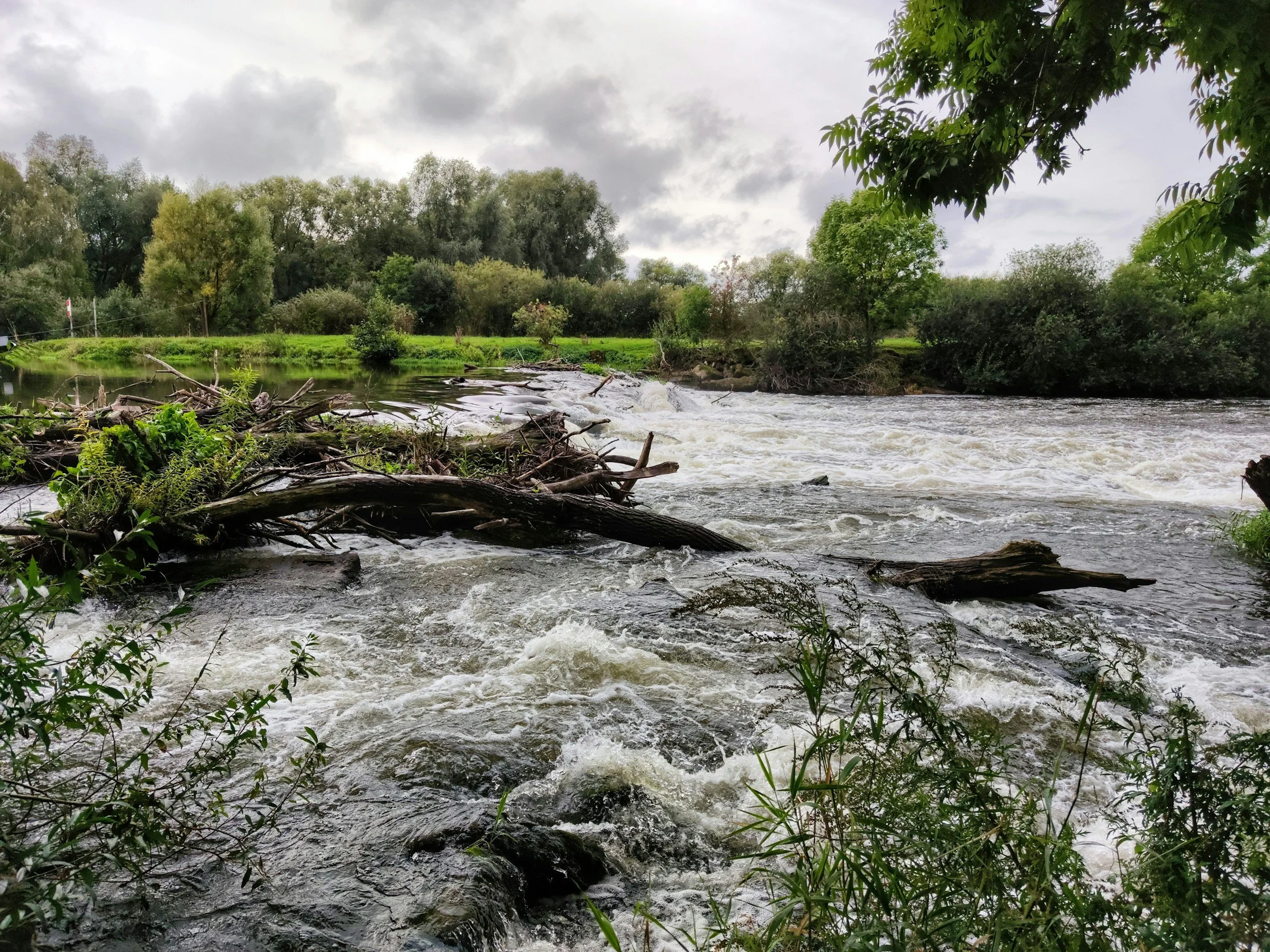
September is National Preparedness Month, and every year it gets me thinking about the part of disaster response most people never see: the radio traffic. When a disaster overwhelms local resources, a state’s governor can call up the National Guard. Guardsmen arrive to run evacuations, clear debris, and staff distribution points shoulder to shoulder with police, fire, and emergency management crews. What surprises most people is that, in many cases, those two groups can’t simply pick up their radios and talk to one another—by design.
I was talking about this recently with Einar DeVore, the Production & Prototyping Manager here at Radio Design Group, who has served in the National Guard. He pointed out something that deserves more attention than it gets: the radios the Guard carries are deliberately incompatible with the systems used by police, fire, FEMA, and other civilian responders.
I’m a longtime ham radio operator, and I’ve seen firsthand how that gap gets bridged.
Military RF vs. Civilian RF: Two Radio Worlds Built for Different Missions
The National Guard’s radios are US military equipment. They’re built to be secure and jam-resistant, because in the Guard’s line of work, someone may be actively trying to listen in or knock the signal off the air.
Civilian public safety radios may or may not be encrypted, and most aren’t designed to hold up against deliberate jamming, because their job is coverage, clarity, and coordination among agencies within a region.
Each is the product of RF engineering choices made for a specific mission.
These systems are, through their engineering, disconnected. However, in a state of emergency, the National Guard and civilian first responders need to be able to communicate.
Why National Guard Radios Are Incompatible With First Responders
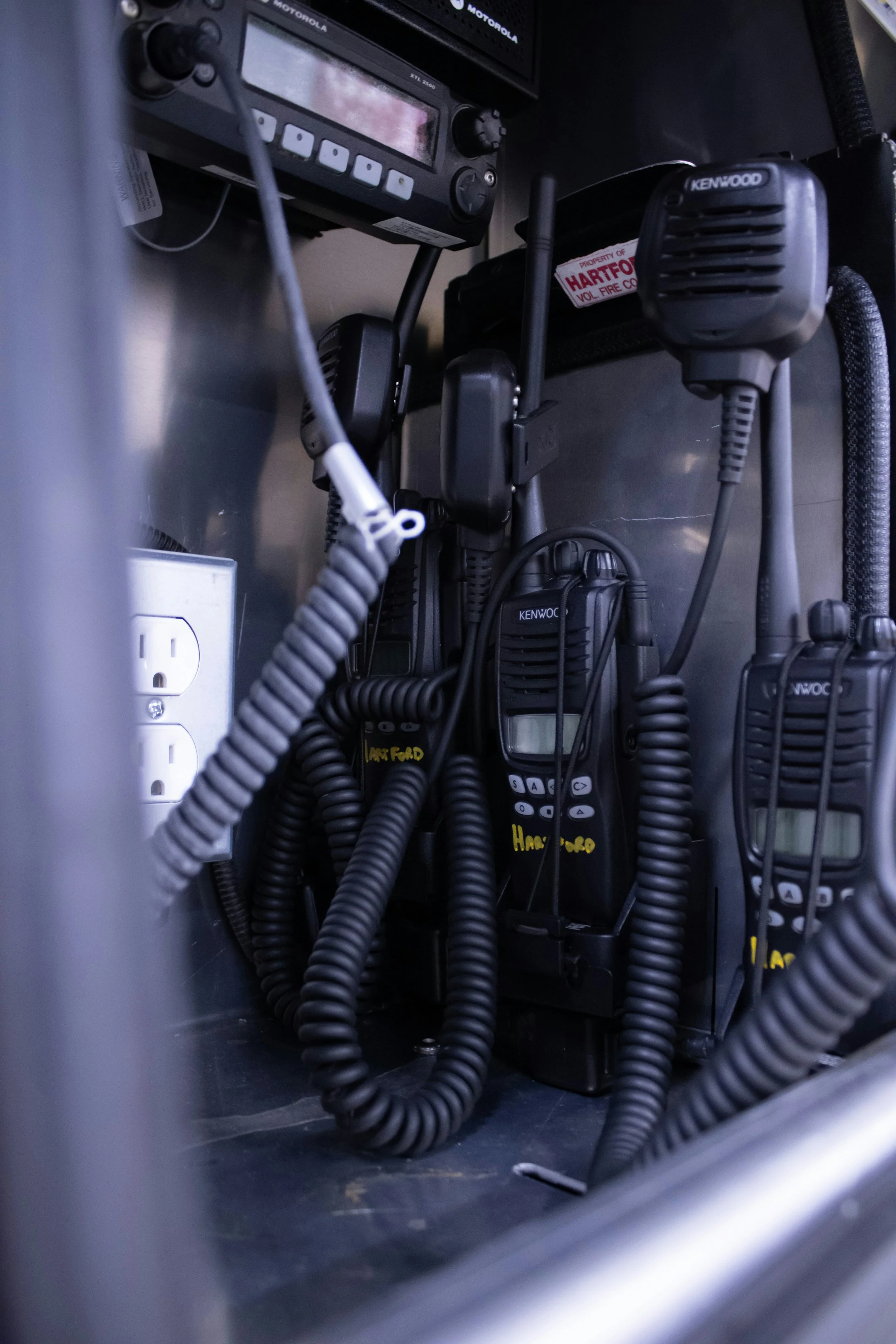
Could you cross-connect the two worlds? Technically, yes. But on the military side, operational security is mission critical. The Guard doesn’t want its people switching over to civilian radios, where they might end up on the wrong channel with the wrong equipment. Due to these security needs, there is a deliberate communications wall between the military side and the civilian side.
Federal law, including the Posse Comitatus Act, draws a clear line between federal military forces and civilian law enforcement, while still allowing the military to assist civil authorities when a disaster calls for it. The radios reflect the same philosophy: help is welcome, but the lines stay in place.
The Guard’s Joint Incident Site Communications Capability, known as JISCC, is a deployable kit that can bridge different radio networks at an incident site without issuing everyone the same radio. But equipment has to be shipped, set up, and staffed, and command posts and emergency operations centers still need people who can move messages reliably between the two sides.
That’s where the human bridge comes in.
The Ham Radio Liaison: Bridging Military and Civilian Emergency Communications
Ham radio operators are assigned to the command center on the National Guard side and to the Emergency Operations Center, or EOC, for the county or state. Those operators pass traffic back and forth, relaying requests, status updates, and resource needs between the Guard and the civilian agencies.
I’ve done that duty myself a few times over the years, and I can tell you the hardest part is, by far, the hours. There’s always a graveyard shift, and a call at ten at night can turn into an all-nighter before you know it.
That’s rough for young people, and it’s rougher as you get older.
These days I’m happy to leave the overnight shifts to operators with more stamina than I have, but I have enormous respect for the volunteers who step up. If you want a sense of what that work looks like, I’ve written about the time ham radio carried a governor’s emergency declaration during a flood here in Josephine County, after a landslide cut the fiber line connecting Grants Pass to the outside world.
When ham operators aren’t available, I’ve heard of an even simpler approach: park a National Guard unit next to the EOC and send runners back and forth with messages. It’s more cumbersome, but if that’s what you’ve got, that’s what you’ve got. Sometimes the low-tech option is the only option.
After 9/11: P25, FirstNet, and the Push for Public Safety Interoperability
Interoperability has been a sore spot in emergency communications for a long time, and September 11, 2001, made the problem impossible to ignore. Many of the agencies responding that day couldn’t talk to one another. Police had their radio system, fire had theirs, and so on.
A fix was already in the works. The Association of Public-Safety Communications Officials (APCO) launched Project 25, better known as P25, in October 1989 to create a common digital radio standard that different agencies could share and link together in an emergency. The first phase of the standard was published in the mid-1990s, but it was still young, and like a lot of digital radio, it had growing pains. Digital signals tend to hold up well until they suddenly don’t, falling off a cliff rather than fading gracefully. Firefighters also ran into what became known as the “fireman problem”: in extremely noisy environments like a burning building, the vocoders that convert analog voice to digital could get confused and make speech unintelligible.
After 9/11, the push to standardize accelerated. Today P25 is common across civilian public safety agencies. There’s also FirstNet, a public safety network built with AT&T on its cellular infrastructure. It can work like a two-way radio or like a phone, and it prioritizes first responders. When public safety isn’t using that capacity, it carries ordinary commercial traffic, and in an emergency, responders move to the front of the line.
What Disaster Communications Teach Us About RF Engineering
I find this whole subject fascinating because it’s a real-world lesson in how RF systems get designed. Interoperability is never an accident. Every radio system reflects its mission: what it has to survive, who it has to reach, and who it has to keep out. Good RF engineering starts with those questions, long before anyone picks a chip or sketches an antenna.
It’s also a reminder that the field is where designs get tested. P25’s early struggles with noise and weak signals weren’t failures of effort; they’re what happens when a design meets conditions nobody fully modeled on the bench. And the ham radio liaison is proof that the most elegant solution is sometimes a trained person with a reliable radio. Knowing when a simpler approach will outperform a complex one is part of the job.
Radio Frequency Engineering Services With a Foot in Both Worlds
Radio Design Group has spent more than three decades working on both sides of that wall. Since 1992, we’ve designed and built RF products for commercial customers, supported defense programs, and helped keep legacy military systems in service through obsolescence mitigation. Add a few decades of amateur radio, and you get a team that understands why civilian and military systems were built the way they were before we ever suggest changing them.
That perspective shapes every project we take on. Whether you’re sustaining a fielded defense system, developing a new wireless product, or looking for custom engineering services to solve an RF problem no off-the-shelf radio can handle, our RF engineering services are built around your mission, not a template. Contact us to talk through your project.
And if this story has you curious about emergency communications, consider getting licensed. The ARRL’s Amateur Radio Emergency Service (ARES) is always looking for operators willing to step up when all else fails.
Frequently Asked Questions
-
Usually not directly. National Guard radios are military equipment designed to be secure and jam-resistant, while police and fire agencies typically use civilian public safety systems such as P25. The two are kept separate by design for operational security. Communication between them is bridged through deployable gateway systems, amateur radio liaisons stationed at each command center, or, in a pinch, runners carrying messages.
-
Amateur radio operators can pass messages between organizations whose radios can’t connect directly, such as a National Guard command center and a county Emergency Operations Center. Ham radio also keeps working when phone lines, fiber, and cellular networks fail, which is why emergency managers rely on volunteer groups like ARES.
-
P25, or Project 25, is a digital radio standard that APCO began developing in 1989 so that different public safety agencies could use compatible radios and link their systems during emergencies. Adoption accelerated after the interoperability failures of September 11, 2001.