
Casting About for My Niche: How RF Engineering Services Found Me
People ask me how RDG came to specialize in the kinds of RF engineering services we offer — custom design, obsolescence mitigation, defense applications.
The honest answer is: one thing led to another. I wasn't following a master plan, I was solving problems.
And the problems, it turns out, were everywhere.
When RF Engineering Isn’t in the Job Description
After a brief stint in Alaska, my an early role in my career wasn't in RF engineering at all. I landed in production special effects at a ABC — think game show lighting, set electronics, specialty displays. I showed up and learned fast. I worked on game shows mostly, with occasional specials mixed in. I kept the elevator running on General Hospital — and yes, it was fake. Just doors and electronics.
The hours were brutal. We're talking sixteen-hour days, six or seven days a week. After about four months, my health was falling apart. I came to a mutual agreement with my employer that it was time to move on.
But before I fully left, I had the chance to do some custom engineering consulting for them.
The $1,000 Minute: What Expertise Is Actually Worth
One afternoon I was down at the studio dropping off some circuit boards. My boss waved me off. "Just dump the stuff and go. I don't have time." He was clearly stressed. A game show had gone down — some stagehand had cut a cable, they'd repaired it, but the electronics still weren't working.
In those days, stopping production tape cost the production company about a thousand bucks a minute. Because you had a studio full of union employees sitting around doing nothing, and you're renting the space on top of that.
I asked what was going on. He explained the symptoms. And because I had been instrumental in building that system, I knew immediately what was wrong: a blown fuse.
I said, "If I can fix it fast, what'll you pay me?"
He thought about it and said, "If you can do it in five minutes, a thousand dollars."
I replaced the blown fuse, the whole system came back up. It took me less than a minute.
I got a check for a thousand dollars. That minute of work was paid at a rate that reflected the knowledge applied, not the time spent.
Simple RF Product Design Beats Overengineered Every Time
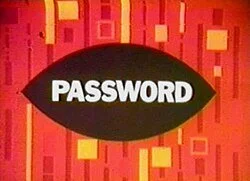
My second lesson from that era came from a game show called Password — specifically, from a piece of hardware that refused to work correctly.
Password had a first-in-lockout system: multiple contestants each had a button, and the first one to press it would trigger a pneumatic arrow that popped up with a whoosh of air, driven by a solenoid. The idea was clever. The execution was not.
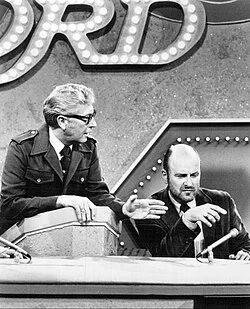
The lockout modules they'd bought kept failing. When they failed, two arrows would come up simultaneously instead of one — which, under FCC rules governing game shows, meant you had to stop production, back up to before the malfunction, and re-tape. At a thousand dollars a minute, this was a very expensive problem. And it happened almost every weekend.
I was the guy they called to fix it. But the modules were potted: completely sealed, impossible to repair.
I would swap units while a producer screamed at me from across the set. After the third weekend of this routine, I'd had enough. I told the producer — not very diplomatically — that it would go faster if he just left me alone.
Then I went to my shop supervisor and proposed something different.
"I can build one of these out of simple relays," I told him. "It'll be one hundred percent reliable. You can't burn them out. It's physically impossible for it to put up two arrows — it's an electromechanical device that simply can't do the wrong thing. And we've got the parts in the bins right now."
He gave me the nod. I built it. I tried it out. It worked. I didn’t ask permission from the producer, and installed it the next weekend.
The lockout system worked like a charm.
The director pulled me aside: "What did you do?" I explained. He nodded slowly. I expected another verbal berating, but I got the opposite. I was his hero. So much so, I was invited to the end-of-season wrap party. The host of Password was Allen Ludden, and his wife — who showed up on the show occasionally — was also there. Her name was Betty White.
From Live Production to Custom Engineering: One Thing Leads to Another
After my consulting stint, I fell into the two-way radio and mobile telephone business — this was before cellular, so the technology was quite different. I worked for a shop in the San Fernando Valley for a couple of years, then relocated and did the same kind of work elsewhere, until I decided it was time to do it myself.
I set up shop in Santa Maria, California, where the oil patch was my primary customer base. Santa Maria sat close to the oil fields outside of town, with more in the Bakersfield area just over the mountains, and offshore operations beyond that. Working in the oil industry meant designing private mobile phone systems for places where public infrastructure simply didn't reach — before cellular was ubiquitous, there was a real, pressing need for custom engineering solutions in the field.
One of my bigger projects was a mobile telephone system for a major oil company, covering their operations throughout the lower Central Valley. Their trucks needed to communicate across large areas with no existing phone service. We made that happen.
Finding the Signal: How Custom RF Engineering Builds a Career
While working the oil patch, I started exploring a technology called ACSB — Amplitude Companded Single Sideband. It didn't require much channel bandwidth compared to FM, which made it attractive for applications where spectrum efficiency mattered. One of my salesmen had a contact in Ventura who was looking at freeway call boxes, and because I had ACSB experience, I had the right technology ready when the opportunity appeared.
That's how the call box business started. And the ACSB experience didn't stop there — it later became the backbone for intercom systems that turned out to work exceptionally well in nuclear power plants. You find a technology that works, you stay with it, and eventually the right application shows up.
That's the pattern of a career in RF engineering services. Somebody comes along and says, "I need this." And you say, "I have a technology for that." — because you've done it before.
The Philosophy Behind RDG's RF Engineering and Custom Design Work
Looking back at those early years, a few things stand out as consistent.
First: expertise has compounding value. Every problem you solve makes the next one faster. That thousand-dollar minute wasn't luck; it was knowledge.
Second: simple, reliable, purpose-built designs outperform overcomplicated ones.
Third: finding your niche isn't always something you plan. Sometimes it's something you build, problem by problem, until one day you look back and realize you've become the person who knows which fuse to pull.
At Radio Design Group, our custom engineering services, RF product design, and consulting work are all built on that same foundation — decades of hard-won experience in exactly the applications where RF complexity meets real-world constraints. If you're working through a problem that needs that kind of depth, we'd like to hear about it.